Use it. Own a part of it.
Years of using a product or service could build a stake in the company behind it. Quiet readers, occasional customers and lawful users of free services count too.
A Kindle. An iPhone. Even a visit to an art collection.
A BOOK BY DR PEPLLUIS ESTEVA
Daniel helps introduce a system that makes the clinic work better. It succeeds. His job disappears. He still has a child to bring up and a life to pay for.
How do you make plans when working hard and doing your job well may no longer be enough to keep it—or even get it in the first place?
Coming to Kindle in English and Spanish
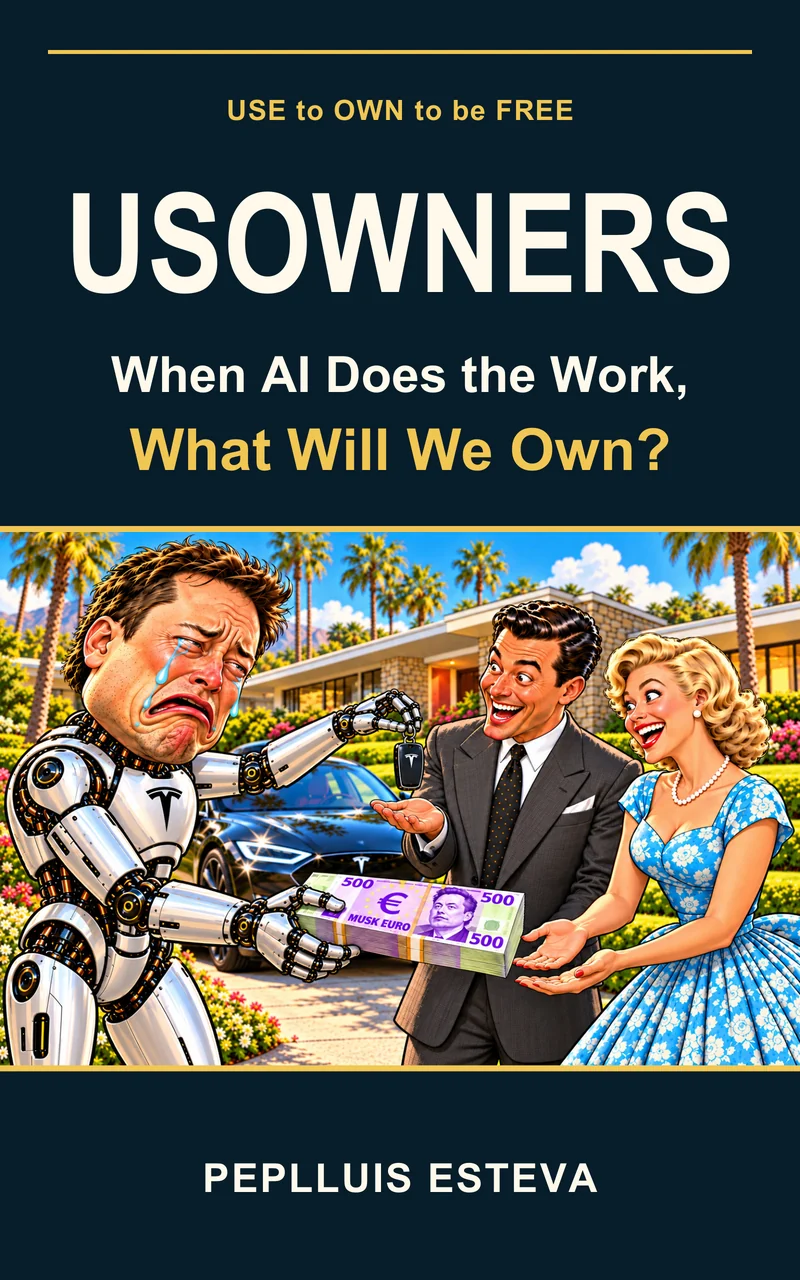
66 SECONDS. ONE BIG QUESTION.
A short introduction to USOWNERS. Then step into Daniel’s story or explore the two routes to ownership.
1:06English trailer
If the player cannot load, open the trailer video.
FROM THE BOOK
“Intelligence is not a title deed.”
A machine can be better at a task. That alone does not decide who should own what it produces.
THE FUTURE, AT HUMAN SCALE
A job. A painting. A Saturday. Follow the people living with the consequences.

TWO ROUTES. A PLACE FOR MORE OF US.
The book explores ownership alongside public income support, services that work and rights people can enforce.
Years of using a product or service could build a stake in the company behind it. Quiet readers, occasional customers and lawful users of free services count too.
A Kindle. An iPhone. Even a visit to an art collection.
More people could own productive resources, individually or together, and hire professionals and authorised AI services to run them. You need not outperform the machine to own a share.
A vehicle fleet. Workshop equipment. A business of your own.
These are proposals explored in the book, not existing user-share programmes offered by the companies named. Commissioned work remains payable separately.
Shares can lose value. Public income support protects people; it does not guarantee investment returns.
A SMALL NUMBER. A BIGGER QUESTION.
Issuing new participant shares equal to 1% of the existing share count each year would give participants, together, about 39.2% after fifty years. But what would they actually be able to decide?
Participants start with no shares. There are no sales, buybacks or other share issues. The voting comparison assumes one vote per participant share and ten per earlier share. These are aggregate ownership percentages, not individual awards, investment returns or forecasts. Source: Appendix C of the book.
Same stake. Different voting rights. Here, earlier shares carry ten votes each.
LINES FROM THE BOOK
For the next conversation about work, progress or what comes after.
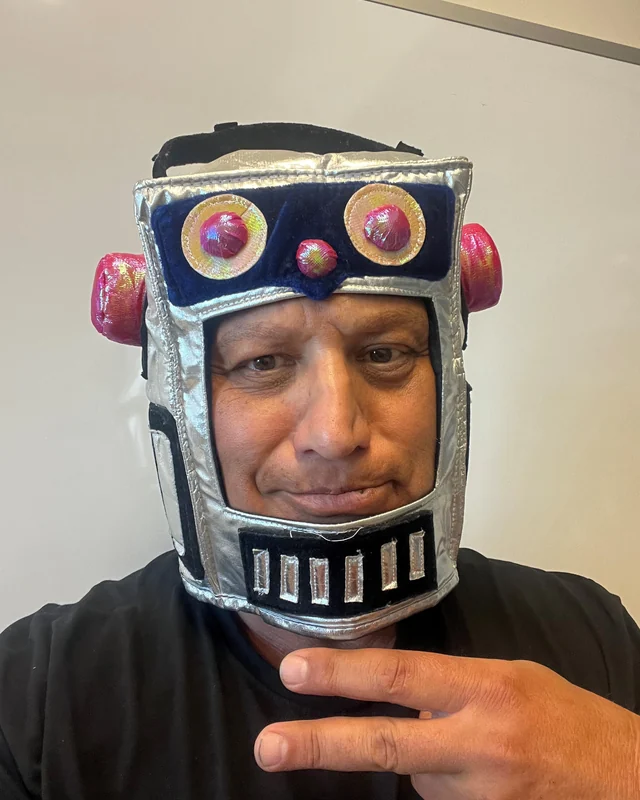
THE AUTHOR
Peplluis has worked in artificial intelligence since 1989. He holds a PhD in Informatics and has helped develop businesses and systems in payments, public services and recycling, including RECICLOS. This book brings that experience to a question that technology alone cannot answer: what should progress leave for the rest of us?
TAKE THE QUESTION WITH YOU
Choose your edition. Read a free opening now; the Amazon purchase links will appear here when available.
ENGLISH
When AI Does the Work,
What Will We Own?
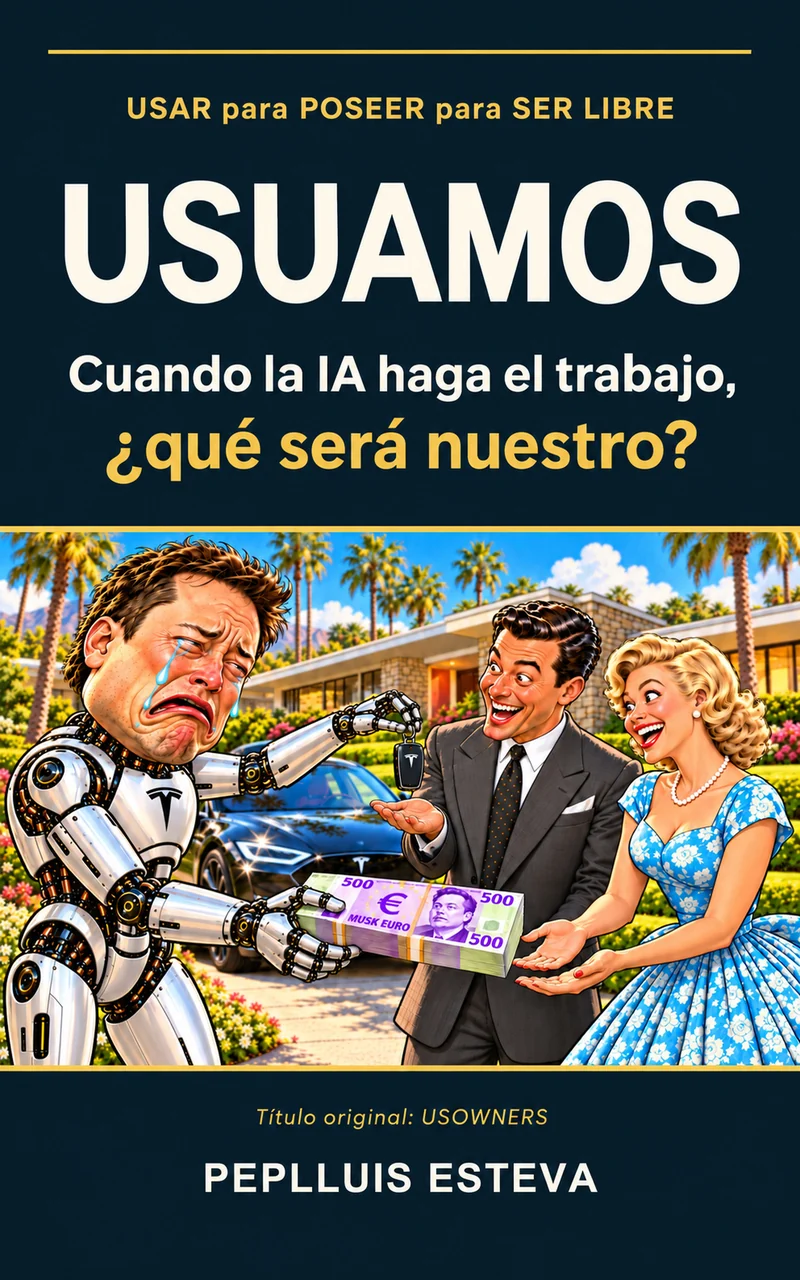
CASTELLANO
Cuando la IA haga el trabajo,
¿qué será nuestro?
“Nobody had to be the best at anything to have a place there.”
From the epilogue